
Mardi Gras Colors and Their Meaning
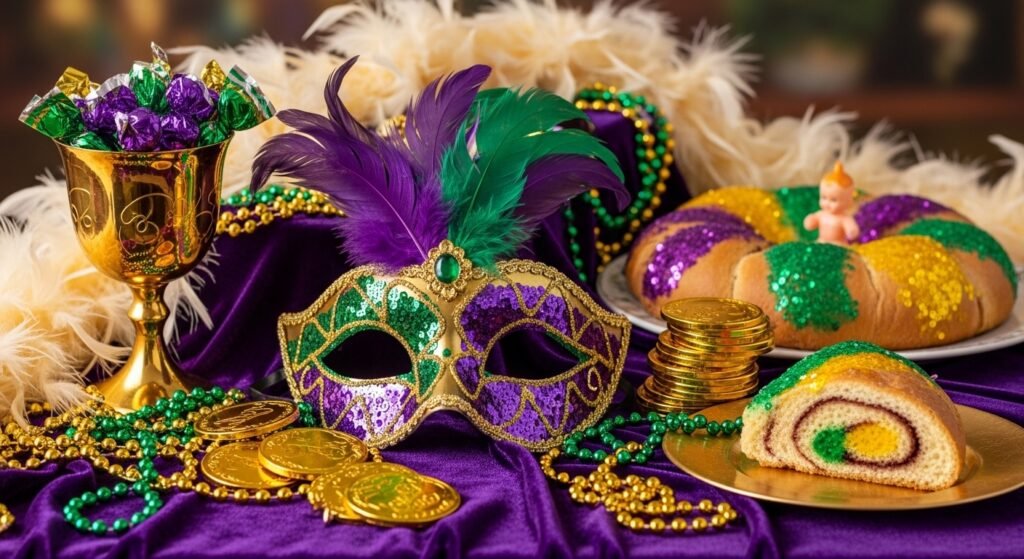
Mardi Gras colors are the official trio of purple, green, and gold used to decorate New Orleans during the Carnival season. These colors work as a visual language to signal the arrival of Fat Tuesday and the festive period between Epiphany and Ash Wednesday. The main benefits of using Mardi Gras colors include creating a unified festive atmosphere, honoring deep-rooted Louisiana traditions, and identifying various krewes during parades. You will primarily see these hues on king cakes, beaded necklaces, and elaborate parade floats. The main components of this palette are purple, which represents justice, green, which represents faith, and gold, which represents power.
Truth About the Purple, Green, and Gold of Mardi Gras
The official Mardi Gras colors are purple, green, and gold. In 1892, the Rex parade theme “Symbolism of Colors” established a specific meaning for each hue that remains the standard today.
-
Purple Represents Justice.
-
Green Represents Faith.
-
Gold Represents Power.
While these meanings are now set in stone, their origin is a bit more complicated than the legends suggest. Many locals believe the colors were chosen in 1872 to honor the visiting Russian Grand Duke Alexei Alexandrovich Romanoff (Romanov). However, research by local historian Errol Flynn Laborde suggests that while the colors appeared during that first Rex parade, the Duke’s visit might not be the primary reason for the specific selection.
You Might Also Like: Color cmy
History of Mardi Gras Colors
The history of Mardi Gras colors begins with the first Rex parade in 1872. The Rex Organization (Rex) needed a flag because the founders believed a king must have a kingdom, and a kingdom must have a flag. Following the tradition of tricolor flags in the United States, Great Britain, and France, they decided on a three-color scheme.
The selection followed the rules of heraldry, which require a combination of “metals” and “colors.”
-
Gold was the obvious choice for a metal to represent royalty.
-
Purple was selected as the primary royal color.
-
Green was chosen as the third color, likely because it was more appealing than the other heraldic options like black.
By the 1892 Rex parades, the “Symbolism of Colors” theme officially linked these shades to the virtues of justice, faith, and power to give the celebration more depth and meaning.
Mardi Gras Colors With other colors
Mardi Gras colors are frequently paired with other shades depending on the specific event or organization. You will often see them alongside:
-
White: Often seen in the “beignet sugar dust” aesthetic or on café au lait inspired decorations.
-
Black: Used by the Krewe of Zulu to provide a sharp contrast to the bright festive tones.
-
Primary School Colors: The palette influenced local universities. Louisiana State University (LSU) adopted purple and gold, while Tulane University chose green.
-
Holiday Overlaps: During St. Patrick’s Day parades in the Big Easy, green becomes the dominant shade, often accented by the lingering purple and gold from the Carnival season.
Mardi Gras Colors importance
The importance of Mardi Gras colors lies in their ability to foster a sense of community and cultural identity in Louisiana. These colors transform the city of New Orleans into a “regal amethyst dream” that signals a time of joy before the solemnity of Lent.
Using the official Mardi Gras colors helps:
-
Boost Tourism: The consistent branding makes the “Big Easy” instantly recognizable worldwide.
-
Preserve Tradition: Using these specific hues connects modern revelers to the 19th-century origins of the Rex Organization.
-
Organize Festivities: Colors help distinguish between different “krewes” and their specific “beaded emerald shimmer” or “gold doubloon cascade” throws.
Where it is used?
Mardi Gras colors are used everywhere in New Orleans during the Carnival season. You can find these hues in the following places:
-
Culinary Treats: King Cake features purple, green, and gold sprinkles over sweet glaze.
-
Street Decor: Flambeaux carriers and parade floats use illuminated palettes of these colors.
-
Apparel: Revelers wear “festive color symbolism” through polo shirts, headbands, and masks.
-
Parade Throws: Doubloons, beads, and “green envy throws” are tossed from balconies and floats.
-
Digital Spaces: Many people update their Facebook, Google, or Email profiles with carnival-themed graphics during the season.
You Might Also Like: Hazel color
Advantages of using It for your work
There are 3 main advantages of using Mardi Gras colors for your work, whether you are a designer, baker, or event planner.
-
Instant Recognition: People immediately associate this palette with Fat Tuesday, which helps your content or products stand out during the “Carnival season.”
-
Psychological Impact: The combination of “royal colors” creates a feeling of “prosperity wishes” and “festive vibrancy” that attracts customers.
-
Cultural Relevance: Incorporating the “historic Mardi Gras colors” shows an appreciation for New Orleans history, which builds trust with local audiences and tourists alike.