
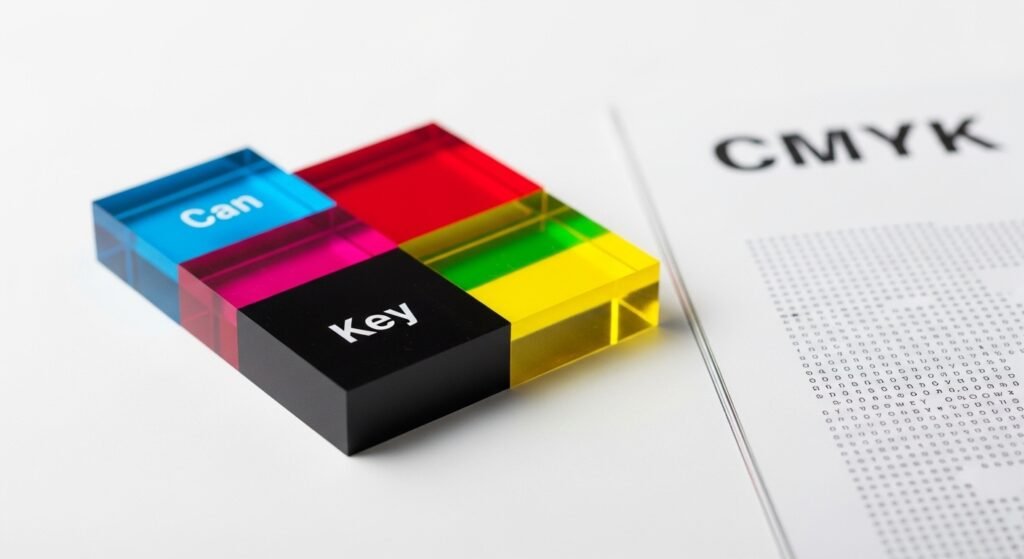
Color cmy model
The Color cmy model (CMYK) is a subtractive color model used in color printing and for describing the four-color printing process. This system functions by masking colors on a light or white background, typically offset-printed paper, to reduce the light that would otherwise be reflected. By using four color components—cyan, magenta, yellow, and black—printers can reproduce a wide color gamut for physical media.
The main benefits of using the CMY model with added black ink include reduced ink consumption, faster drying times, and more consistent dark tones. This process is the standard for high-quality printed materials, including magazines and photographs. The primary components of this system are the three pigmented inks (cyan, magenta, and yellow) and the “key” plate (black) used to provide depth and detail.
Color cmy model
The CMYK color model is a subtractive color model used in color printing that relies on four specific ink colors: cyan, magenta, yellow, and black (the key plate). In this subtractive system, inks reduce the light reflected from a white background. White represents the natural color of the paper or substrate, while black results from the dense combination of colored inks.
This system contrasts with the RGB color model (RGB) used for digital displays. While RGB is an additive process where light creates color, CMYK is a physical process where pigments absorb light. The addition of black ink (K) is necessary because mixing 100% cyan, magenta, and yellow pigments typically produces an imperfect, muddy brown rather than a true black.
You Might Also Like: Coloration indigo
Halftoning
Halftoning (or screening) is a technique that allows a printer to produce continuous tones by varying the size and spacing of small ink dots. This process creates the perception of various shades and intermediate colors that the human eye blends at a distance. For example, a 20% coverage of magenta ink dots creates a pink tone rather than a solid magenta block.
Without halftoning, CMYK inks could only produce 8 basic colors:
-
Cyan
-
Magenta
-
Yellow
-
Red
-
Green
-
Blue
-
White
-
Black
Modern digital color halftoning uses complex algorithms to ensure that these dots do not create distracting patterns, such as moiré, while maintaining high image fidelity.
Comparison to Color cmy
The CMYK model is an extension of the CMY color model (CMY) that includes black ink for practical printing efficiency. While the CMY model theoretically covers the entire spectrum, four-color printing adds the “key” (K) plate for 4 primary reasons:
-
Precision: The black plate provides sharp outlines and legible text that three-color mixing cannot match.
-
Saturation: It enables “rich black,” which is a dark area printed with CMY and then overlaid with black ink.
-
Economy: Black ink is generally more cost-effective than using three separate colored inks to create dark tones.
-
Drying: Using a single black ink reduces the total amount of wet ink on the paper, preventing paper distortion.
Techniques like under color removal (UCR) and gray component replacement (GCR) are used to calculate the exact amount of black ink needed to replace overlapping cyan, magenta, and yellow.
Other printer color models
There are 3 main alternative printer models used for specialized needs:
-
Spot Color Printing: This uses specific pre-mixed inks, such as those from the Pantone system, for fixed colors that CMYK cannot perfectly replicate.
-
CcMmYK color model: This expanded version adds light cyan and light magenta to improve gradients in photo-quality printing.
-
CMYKOG Hexachrome: This model adds orange and green inks to the standard four, significantly increasing the reproducible color gamut.
Comparison Of Color cmy with RGB displays
RGB displays emit light, while CMYK inks absorb light. This fundamental difference means that the color gamut for a computer monitor (RGB) is generally wider than what a printer (CMYK) can produce.
Cyan absorbs red light, magenta absorbs green light, and yellow absorbs blue light. When colors are converted for print, some vibrant “electric” colors seen on a screen may appear duller on paper. Standards like Specifications for Web Offset Publications (SWOP) help designers predict how digital colors will translate to physical ink.
Conversion
There is no single universal formula to convert RGB to CMYK because both models are device-dependent. Accurate conversion requires color management systems and ICC profiles that map the specific capabilities of the input device (like a camera) to the output device (like an offset press).
Modern software uses these profiles to handle factors such as dot gain and the CIE 1931 color space definitions. Without proper calibration, colors may shift significantly during the transition from digital design to final print.
You Might Also Like: Khaki color
RGB/CMY Digital Color Wheel
The RGB/CMY Digital Color Wheel is a cognitive tool that displays the entire color spectrum based on RGB color mixing principles. Created by Petronio Bendito, this wheel highlights the major colors of the digital age: red, green, blue, cyan, magenta, and yellow.
Unlike traditional 12-step wheels, this 30-step model includes magenta, which is a non-spectral color. It serves as an interface for digital color literacy, helping designers understand:
-
Primary colors: Red (0°), Green (120°), and Blue (240°).
-
Secondary colors: Yellow (60°), Cyan (180°), and Magenta (300°).
-
Intermediate colors: Sets of transitionary steps (like Red-Yellow) used to train the eye to see subtle color nuances.
Workshop and Lecture
The Human Vision Color Wheel workshop teaches students how to build their own color systems based on the trichromatic theory of color vision. These lectures bridge the gap between art and science, allowing participants to explore color through digital collage and RGB mixers.
Participants learn about the history of color theory, from Jacob Christoph Le Blon to the modern Technicolor processes. For those interested in advanced color theory, these sessions provide practical experience in mixing and creating colors for media arts.